From birth, each stage of a baby’s development is a unique and exciting chapter, full of important milestones, such as their first smiles and steps.
Witnessing this growth is a rewarding experience. This article guides parents on this journey, exploring each stage of development and strengthening the bond with the baby.
Motor development
A baby’s motor development refers to the skills they learn to use to move and control their little body.
This development begins in the very first days of life, when the baby starts moving their arms and legs involuntarily, until reaching important milestones such as rolling over, sitting up, crawling, and finally walking.
Naturally, at first, movements are uncoordinated, but over time, the baby gains more motor coordination, control and precision.
Parents can help by stimulating the baby with games, placing toys within their reach, and encouraging them to roll over, sit up, and crawl.
It is extremely important to emphasize that, when it comes to child development, each child develops at their own pace. Even so, it is essential to pay attention to their progress and seek medical help if there are concerns regarding motor development.
Cognitive Development
Cognitive development happens when the baby begins to learn and understand everything that happens around them. In the first months of life, this happens through the senses.
That is why it is very common to see young children exploring objects, looking closely at faces, and paying attention to all kinds of sounds.
Soon, over time, they begin to recognize familiar people and objects and imitate sounds and gestures.
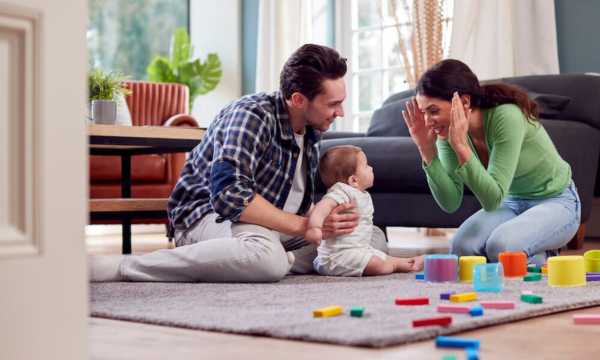
At this stage of baby development, playing with blocks and peekaboo games can help stimulate their creativity.
In this sense, it is essential to provide a safe and stimulating environment so they can explore and learn with love and security.
Social Development
Finally, social development happens when the child begins to interact with other people. From a very early age, babies show an emotional bond with the people who care for them, being able to recognize their faces and voices.
As they grow, more complex social skills emerge, such as imitating behaviors, sharing toys, and even understanding other people’s emotions.
Playing with other babies and interacting with adults in social situations can help them learn about cooperation, empathy, and communication.
At this very important stage, parents play a fundamental role in the baby’s social development by offering love, support, and opportunities for social interaction, such as playing together, reading stories, and participating in group activities.
Games to encourage baby development
As we saw earlier, parents play a fundamental role in baby development, and games can be a great way to achieve this goal. Discover some of them:
- Sing and soothe: Sing lullabies to your baby while rocking them. This not only calms them, but also helps stimulate auditory development and emotional connection.
- Grab-and-release game: In this game, you can use soft toys or colorful objects that the baby can easily grasp. Let them grab the object and then release it so they can try to catch it again. This helps with the development of motor coordination and the understanding of cause and effect.
- Fabric or plastic books: These types of books are excellent! Give your baby books with colorful pictures and different textures to explore. This type of activity helps develop vision, touch, and motor coordination.
- Water games: During bath time, play with different toys that float in the water. This simple and fun activity helps with sensory development and motor coordination.
The importance of reading for baby development
Reading moments are not just about the words on the pages, but also about the experience of reading, the bonds that are strengthened, the skills that develop, and the doors that open to imagination.
Each page is a new adventure, an opportunity for the baby to discover new sounds, colors, and patterns. And for parents to be enchanted by the sparkle in their children’s eyes.
Reading not only helps develop language and cognitive skills, but also strengthens the bond between parents and children, creating unique moments that will be remembered forever.
How to talk to your baby
Do not hesitate to talk to your baby! Even if it seems like they do not fully understand yet. If you do not know where to start, do not worry. Check out some tips below:
- From birth, talk to your baby, even if they still cannot respond.
- Use short sentences and simple words to make it easier for your child to understand.
- Sing lullabies and nursery rhymes to capture your baby’s attention.
- Tell the baby what you are doing throughout the day, such as changing diapers, giving a bath, etc.
- When your baby makes sounds or gestures, respond enthusiastically!
- Complement your words with facial expressions and gestures to help your baby better understand what you are saying.
Certainly, monitoring baby development is an exciting journey, full of important milestones at every stage. Remember: with love, play, and stories, you will shape your little one’s future, turning each developmental achievement into a valuable memory for a lifetime.